Recycling and Sustainability — House Clearance Docklands
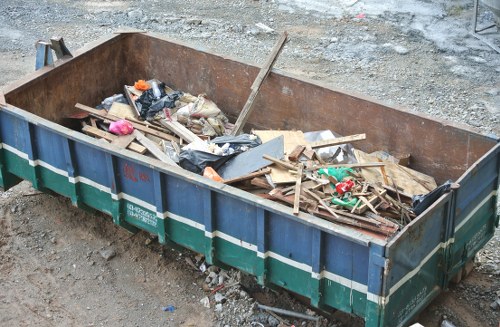
At House Clearance Docklands we prioritise an eco-friendly waste disposal area and a truly sustainable rubbish area across the Docklands. Our approach to house clearance in Docklands is designed to reduce landfill, maximise reuse and support community partners. We work to divert as much material as possible from general waste streams by sorting on-site, redirecting reusable items and ensuring that hazardous and electronic waste follow strict disposal routes. Our team is trained to identify items for repair, donation or specialist recycling so that every clearance contributes to the circular economy.
We have set an ambitious recycling percentage target: 85% diversion by weight for typical domestic clearances, combining reuse, recycling and energy recovery where appropriate. That goal is backed by measurable operational steps — from collection and segregation to transfer station sorting and documented final destinations. Our sustainability metrics are reviewed quarterly so that each house clearance in Docklands improves on the last, and we publish summaries of progress for transparency within local communities.
Local logistics are central to achieving a low-carbon, efficient service. We route items to local transfer stations and reuse centres across East London and Docklands boroughs, ensuring minimal vehicle mileage and quick sorting. By using nearby transfer hubs in Tower Hamlets, Newham and Greenwich zones, and working with authorised private transfer yards, we reduce journey times and emissions. This localised approach supports faster processing and increases the chance that materials enter the correct recycling streams rather than being handled multiple times.
We partner with a network of charities and social enterprises to extend the life of furniture, textiles and working appliances. Local organisations and community reuse projects are central to our model: donations of usable items go to charities and furniture banks operating in the Docklands area, while unsalable but repairable pieces are directed to social enterprises for refurbishment. These partnerships not only reduce waste but also support vulnerable residents through redistribution and training programmes.
Local boroughs and waste separation
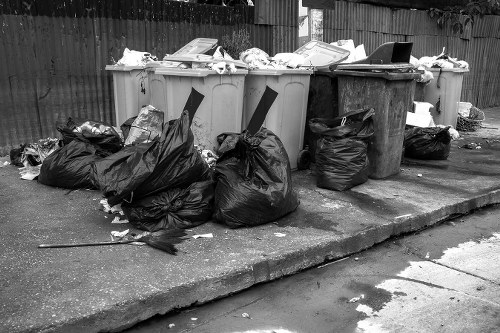
The boroughs that serve the Docklands area encourage systematic waste separation and we align our sorting to those schemes. In practice this means separating paper and card, glass, metal, plastic and food waste where local collection services allow. Many councils give clear guidance on recycling containers and hazardous items: batteries, electricals (WEEE), paints and solvents should be segregated and sent to authorised handlers. Because Docklands covers parts of Tower Hamlets, Newham and neighbouring boroughs, our crews are familiar with the subtle differences in local recycling collections and ensure items are prepared accordingly before transfer.
To complement borough systems we also maintain clear labelling for collections, use colour-coded sacks and bins on-site, and keep a live inventory of materials taken for reuse versus recycling. This operational discipline helps us to achieve the 85% target while respecting each borough’s rules on contamination and mixed loads.
Our fleet strategy underpins the low-carbon ambition. We use a mix of low-carbon vans, plug-in hybrid and fully electric vehicles for short urban runs, and deploy route optimisation software to cut unnecessary mileage. For small clearances and dense central Docklands streets we sometimes use cargo bikes and hand-cart teams to minimise traffic and emissions. Vehicle choice and maintenance are part of our sustainability policy — tyres, fuel monitoring and driver training all contribute to lower overall emissions per clearance.
Services and sustainable processes include:
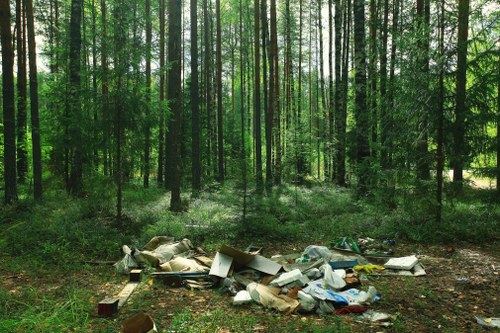
- Reuse and donation: items in reuseable condition are offered to charity partners or community projects.
- Segregated recycling: plastics, glass, metals and paper are separated at source.
- Hazardous and WEEE handling: electronics and hazardous wastes go to licensed facilities.
- Bulky item breakdown: larger items are dismantled when safe to do so to maximise material recovery.
- Documentation and tracking of loads to local transfer stations and recycling centres.
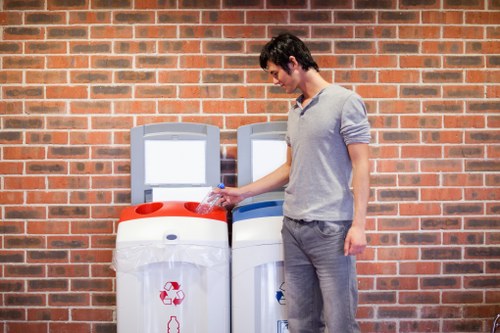
We record the outcome of each clearance so customers and partners can see how material was managed: the percentage reused, recycled and responsibly disposed of. Our tracking supports compliance with waste duty of care and helps identify opportunities to increase reuse rates. We aim to raise the recycling percentage target over time through continuous improvement and stronger reuse partnerships.
By combining local knowledge of borough recycling schemes, formal partnerships with charities and social enterprises, an emphasis on low-carbon vans and back-to-base transfer planning, House Clearance Docklands delivers a service that turns house clearances into a net benefit for the Docklands environment. Whether managing a single-room clearout or a full property clearance, our focus remains on creating an eco-friendly waste disposal area and a lasting sustainable rubbish area for the communities we serve.