Health and Safety Policy — House Clearance Docklands
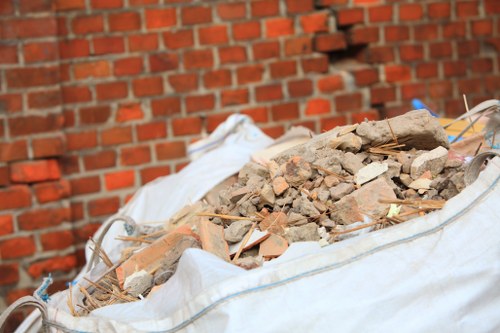 House Clearance Docklands operates a comprehensive health and safety policy to protect employees, contractors and the public while delivering house clearance and rubbish removal services. This document sets out the principles and practical measures that govern our waste removal operations and the rubbish company service area, and it applies to all personnel involved in clearance, transport and disposal activities. The policy is designed to be proportionate and consistent with good industry practice for clearance services in urban and mixed-use environments.
Policy objectives
Our objectives are to prevent injury and ill‑health, to minimise environmental impact, and to ensure that all house clearance service in Docklands is carried out safely. We commit to risk assessment, provision of suitable personal protective equipment (PPE), safe manual handling procedures, and the segregation of hazardous materials. These measures are supported by ongoing training, monitoring and periodic review to keep our rubbish removal Docklands operations effective and lawful.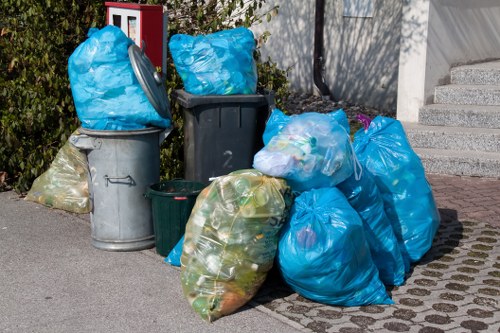
Principles and legal compliance
The business will:- Assess and record hazards associated with each clearance job;
- Eliminate or control risks so far as is reasonably practicable;
- Ensure safe handling and storage of items removed from properties;
- Comply with applicable health, safety and environmental obligations relevant to waste and clearance operations.
Scope and application
This policy covers domestic and commercial house clearance work, small-scale demolition, clearance of bulky waste, and rubbish collection within the company's defined service footprint. It addresses risks such as manual handling injuries, slips and trips, exposure to dust and biological hazards, sharps and asbestos risk identification, vehicle and traffic safety, and secure loading for transport to authorised disposal facilities.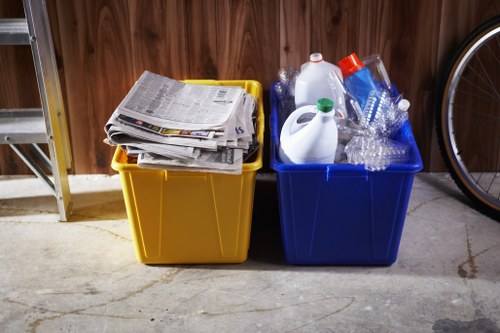
Responsibilities
Management will:- Provide leadership, resources and supervision to implement the policy;
- Ensure appropriate training and competence assessments;
- Maintain records of risk assessments, training, inspections and incident reports.
To support the safety culture, we employ a simple hierarchy of controls: avoid unnecessary work at height, substitute hazardous processes where possible, isolate risks, use engineering controls for dust suppression, and rely on administrative controls and PPE as final layers of protection.
Operational controls
All clearance projects must begin with a written job brief and a dynamic risk assessment. Key operational controls include:- Manual handling protocols, including team lifts and mechanical aids;
- Clear segregation and labelling of recyclable, non‑recyclable and hazardous wastes;
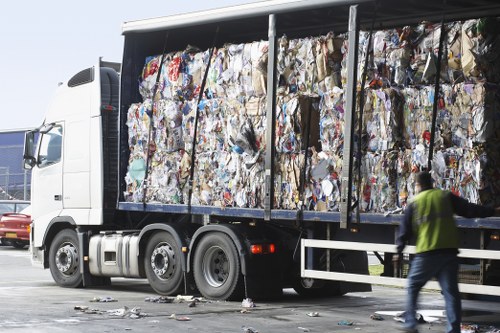
- Safe container selection, securement and vehicle loading to prevent shifting during transit;
- Controlled access to work areas to protect bystanders and property.
Personal protective equipment is issued relevant to task risk assessment and maintained in good condition. PPE includes gloves, protective footwear, high‑visibility clothing, eye protection and respiratory protection where dust or fumes are present. Use of PPE is mandatory where indicated by the assessment; substitution with higher protection levels is encouraged where risks are uncertain.
Training, competence and communication
Training programmes cover safe clearance techniques, manual handling, vehicle loading, hazardous waste awareness and incident reporting. Competence is assessed before allowing staff to work unsupervised. Safety briefings are carried out at the start of each task and whenever conditions change. Clear communication channels ensure that hazards found on site are escalated and managed swiftly.
Incident reporting and continuous improvement
All incidents, near misses and health concerns are reported, investigated and recorded. Lessons learned are fed back into training and operational procedures. Regular audits and inspections of vehicles, equipment and work practices are conducted to ensure compliance with this policy and to identify opportunities for improvement in our rubbish company service area.Monitoring and review The policy is reviewed at least annually and after any significant incident or change in operations. Performance indicators include accident frequency, completion of training, audit findings and corrective actions implemented. Records of reviews and actions taken are retained to demonstrate commitment and accountability.
Conclusion — House Clearance Docklands is committed to providing safe, reliable and environmentally responsible clearance and waste removal services. By following this health and safety policy, our teams and clients benefit from structured risk management, competent personnel and a clear emphasis on prevention and continuous improvement across the rubbish removal and waste clearance activities we deliver.